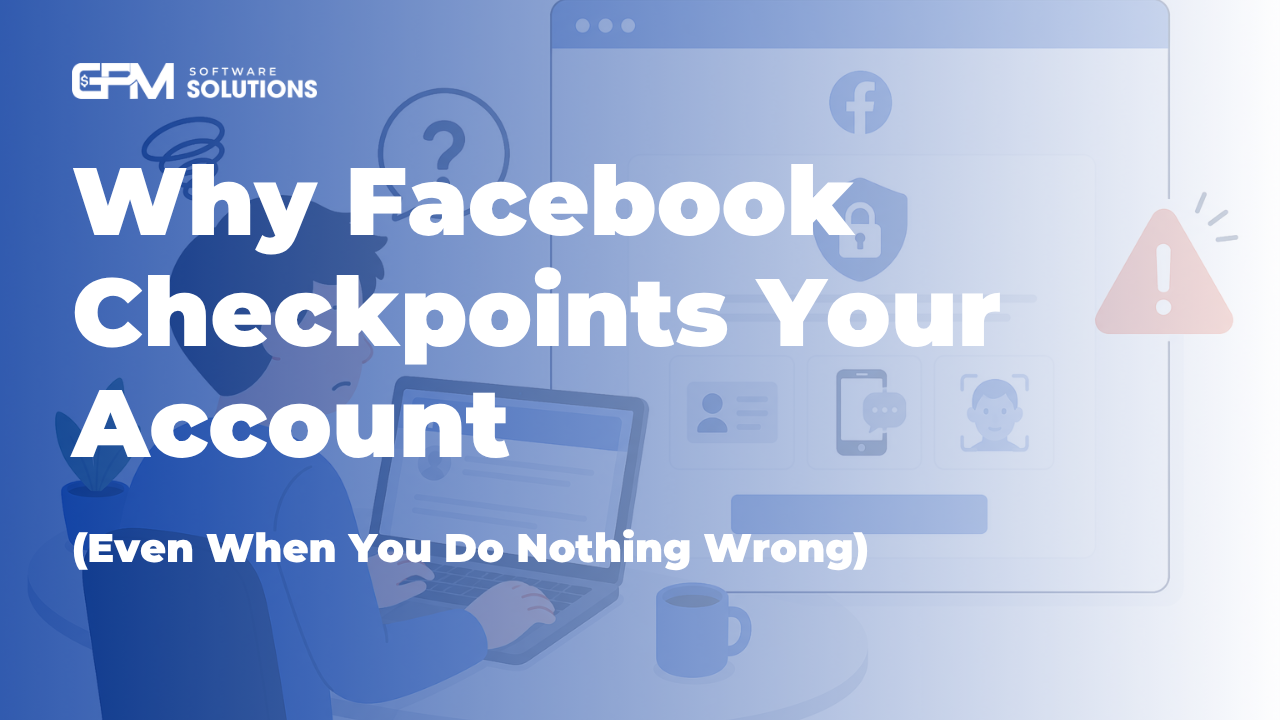
Why Facebook Checkpoints Your Account (Even Do Nothing Wrong)

You log into your Facebook account like usual.
And suddenly:
“We’ve detected suspicious activity. Please verify your identity.”
No ads.
No spam.
No unusual actions (at least from your perspective).
So why is this happening?
The truth is:
Facebook doesn’t judge based on what you think is normal — it judges based on patterns and data.
What Is a Facebook Checkpoint?

A Facebook checkpoint is a security measure.
It’s triggered when Facebook detects something unusual about your account, such as:
Login behavior
Device changes
Location shifts
Its purpose is simple:
To confirm that you are a real user, not a bot or attacker.
Why Facebook Flags Your Account
Even if you “did nothing wrong,” the system might see something very different.
Here are the most common reasons.
1. Logging in from a New IP Address
Facebook tracks your login locations.
If you:
Switch IPs frequently
Use proxies from different countries
→ It looks like your account is being accessed by different people.
2. Device or Browser Changes
If your device suddenly changes:
Different browser
Different OS
Different fingerprint
→ Facebook sees this as a potential takeover attempt.
3. Fingerprint Inconsistency
Even with the same IP, your browser fingerprint matters.
If:
Your timezone doesn’t match your IP
Your browser data changes frequently
→ This creates suspicion.
4. Session Irregularities
Your session tells Facebook how you stay logged in.
Problems include:
Session expiration too often
Logging in repeatedly
Session data mismatch
→ These signals can trigger verification.
5. Behavior That Looks Automated
Facebook monitors how you interact.
Red flags:
Fast clicking
Repetitive actions
Logging into multiple accounts quickly
Even if you're manual, your behavior may look like a bot.
Why You Get Checkpointed “For No Reason”
This is the most frustrating part.
You may:
Use your account normally
Not run ads
Not spam
And still get checkpointed.
Why?
Because Facebook analyzes:
Patterns over time
Risk scoring
Cross-account signals
So even small inconsistencies can trigger a checkpoint.
What Facebook Actually Sees
While you see:
“I just logged in normally”
Facebook sees:
New IP + new device
Different fingerprint
Changed session pattern
→ Combined, this looks suspicious.
How to Reduce Facebook Checkpoints
You can’t eliminate checkpoints completely — but you can reduce them significantly.
1. Keep Your Environment Stable
Use the same browser setup
Avoid switching devices frequently
2. Use Consistent IPs
Avoid changing IP too often
Stick to one location
3. Maintain Fingerprint Consistency
Match timezone with IP
Keep browser data stable
4. Avoid Frequent Logins
Stay logged in when possible
Don’t log in/out repeatedly
5. Act Like a Real User
Normal browsing behavior
Avoid rapid actions
Gradual activity increase
A Better Way to Stay Stable with GPMLogin
Managing all these factors manually is difficult.
With GPMLogin, you can:
Keep a consistent browser environment
Maintain stable fingerprints
Assign fixed proxies
Avoid session inconsistencies
Try It Risk-Free
You can:
Use 7 days free trial
Access all features
Create up to 20 profiles
This helps you:
Reduce checkpoint frequency
Keep accounts stable
Scale safely
Conclusion
Facebook checkpoints are not random.
They are triggered by:
Inconsistencies
Risk signals
Behavioral patterns
Even if you think you did nothing wrong, the system may see otherwise.
Related Topics
To understand deeper, read:
Final Thoughts
If you want to avoid checkpoints, focus on one thing:
Consistency
When your IP, fingerprint, session, and behavior all align, your account becomes far less suspicious.
With the right setup and tools like GPMLogin, you can maintain that consistency and reduce risk significantly.