YouTube IP Ban: Unmasking Restrictions, Solutions & Prevention
Facing a YouTube IP ban? Discover what these restrictions mean, common causes, how to check if your IP is blocked, effective solutions,...
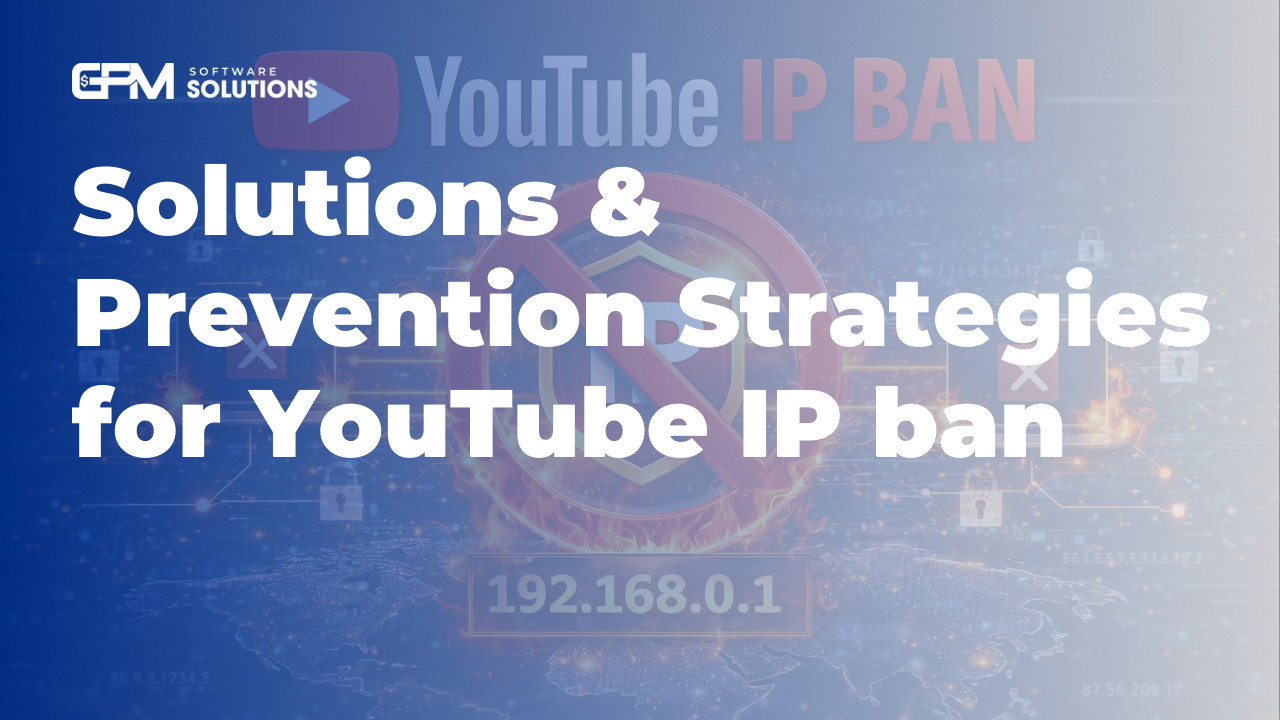
YouTube IP Ban: Understanding Restrictions, Fixes, and Prevention Strategies
Have you ever opened YouTube only to find that nothing loads—no videos, no homepage, no comments—while the rest of the internet works perfectly? Refreshing the page or switching browsers does not resolve the issue. In many cases, this is not a technical glitch but a sign of a YouTube IP restriction, often referred to as a “YouTube IP ban.”
Despite how alarming it sounds, YouTube IP bans are rarely permanent. They are typically automated, temporary restrictions designed to protect the platform from abuse, excessive automation, or suspicious traffic patterns. Once you understand how they work, they are manageable—and largely preventable.
This guide explains what a YouTube IP ban actually means, why it happens, how to confirm it, how to recover quickly, and how to prevent future restrictions—especially if you manage multiple YouTube accounts or perform high-volume operations.
What Does a “YouTube IP Ban” Really Mean?
YouTube typically does not issue permanent IP bans to regular users. What most people experience is rate limiting or temporary IP-level blocking.
Common types of IP restrictions
Rate limiting
When too many requests originate from the same IP address in a short time—such as page loads, API calls, comments, or downloads—YouTube temporarily slows or blocks traffic. This typically resolves within 24–48 hours.
Network-level blocking
If an IP is associated with automation, scraping, or suspicious behavior, YouTube may block access entirely from that IP. This affects everyone using the same network, including shared office or home connections.
IP restriction vs account ban
Type | Trigger | Scope | Duration |
Account ban | Policy violations | Single account | Permanent or appealable |
IP restriction | Excessive requests, automation | Entire IP/network | Temporary |
Most “YouTube IP bans” fall into the second category.
Why YouTube Blocks IP Addresses

YouTube relies on automated systems that detect behavior patterns inconsistent with real human usage. These systems are not personal—they are statistical.
1. Aggressive scraping or automation
Bots, scripts, or scraping tools that send rapid requests often trigger HTTP 429 errors (“Too Many Requests”) and short-term IP blocks.
2. High-volume video downloading
Downloading large numbers of videos in a short time creates abnormal traffic patterns. Even legitimate tools can cause restrictions if used too aggressively.
3. Managing multiple accounts from one IP
Running many YouTube channels from a single IP is common for marketers and agencies, but it increases account linkage risk and IP suspicion.
4. Poor-quality VPNs or shared proxies
Free VPNs and public proxies reuse IPs across thousands of users. If any user abuses YouTube, the entire IP range may be flagged.
5. Frequent location changes
Logging in from different countries within short timeframes can trigger Google’s security systems, especially when combined with automation.
Does Normal YouTube Usage Cause IP Bans?
No. Watching videos, liking content, subscribing, or commenting manually does not cause IP bans.
However, tools that simulate human behavior—auto-refresh views, mass comments, or automated likes—often do. Casual users are rarely affected, but marketers and operators working at scale need better infrastructure.
How to Check If Your IP Is Restricted
Step 1: Switch networks
Turn off Wi-Fi and use mobile data. If YouTube loads normally, your original IP is likely restricted.
Step 2: Test incognito mode
This rules out corrupted cookies or browser cache issues.
Step 3: Try another device on the same network
If all devices fail on the same Wi-Fi, it strongly indicates an IP-level issue.
Step 4: Run network diagnostics
Use:
ping youtube.com
tracert youtube.com (Windows)
traceroute youtube.com (Mac/Linux)
Repeated timeouts suggest blocked routing.
API error codes to watch
Code | Meaning |
429 | Too many requests |
403 | IP or credential blocked |
503 | Temporary throttling |
Repeated 429 or 403 errors across tools usually confirm an IP restriction.
How to Recover From a YouTube IP Block
1. Restart your router
Many ISPs assign dynamic IPs. A restart may immediately resolve the issue.
2. Use a mobile hotspot
Mobile networks use separate IP ranges and often bypass restrictions instantly.
3. Clear browser data and DNS cache
Old cookies or DNS entries may continue triggering blocked sessions.
4. Pause automation for 24–48 hours
Allow YouTube’s systems to reset before resuming any high-volume activity.
5. Use high-quality residential proxies
Residential IPs resemble real user traffic and are far less likely to be blocked than datacenter proxies.
6. Isolate browser fingerprints
Even with a new IP, a reused browser fingerprint can link activity. Anti-detect browsers like GPMLogin assign each session a stable, unique digital identity.
Why IP Rotation Alone Is Not Enough
Changing IPs without changing browser fingerprints often increases suspicion. One fingerprint jumping across many IPs is a strong automation signal.
Effective protection requires:
Dedicated IPs per account
Stable, realistic browser fingerprints
Isolated cookies and sessions
Preventing Future YouTube IP Restrictions
1. Respect usage limits
Throttle requests, add delays, and avoid bursts of activity.
2. Use official YouTube APIs
APIs provide structured, rate-limited access and are safer than scraping raw pages.
3. Avoid shared VPNs
Invest in private or residential proxies for long-term stability.
4. Separate fingerprints and IPs
Each account should have its own browser profile, cookies, and proxy.
5. Assign one profile per channel
Never reuse the same browser environment across multiple YouTube accounts.
Using GPMLogin for YouTube Operations
GPMLogin is an anti-detect browser designed for stable, scalable multi-account management. Each browser profile functions as a separate device with its own fingerprint, storage, and proxy.
Key benefits for YouTube teams
Unique, persistent browser fingerprints
Proxy assignment per profile
Mobile and desktop profile emulation
Secure profile sharing for teams
Fast creation and cloning of environments
This setup prevents account linking, reduces IP risk, and keeps YouTube operations stable even at scale.
Frequently Asked Questions
Can YouTube permanently ban my IP?
Permanent IP bans are extremely rare and usually associated with severe abuse.
How long do IP restrictions last?
Most last from a few hours to several days.
Are VPNs safe to bypass IP blocks?
Only high-quality, private VPNs or residential proxies are reliable.
Is GPMLogin hard to use?
Basic multi-account usage requires minimal technical skill. Advanced automation features are optional.
Getting Started Safely
If you manage multiple YouTube accounts, automate uploads, or scrape analytics data, a proper setup is essential.
A secure workflow includes:
One browser profile per account
Dedicated IPs
Stable fingerprints
Controlled activity pacing
Tools like GPMLogin provide this infrastructure, allowing you to scale YouTube operations without constant interruptions or bans.